



Why wear a wetsuit ?
29 September 2026

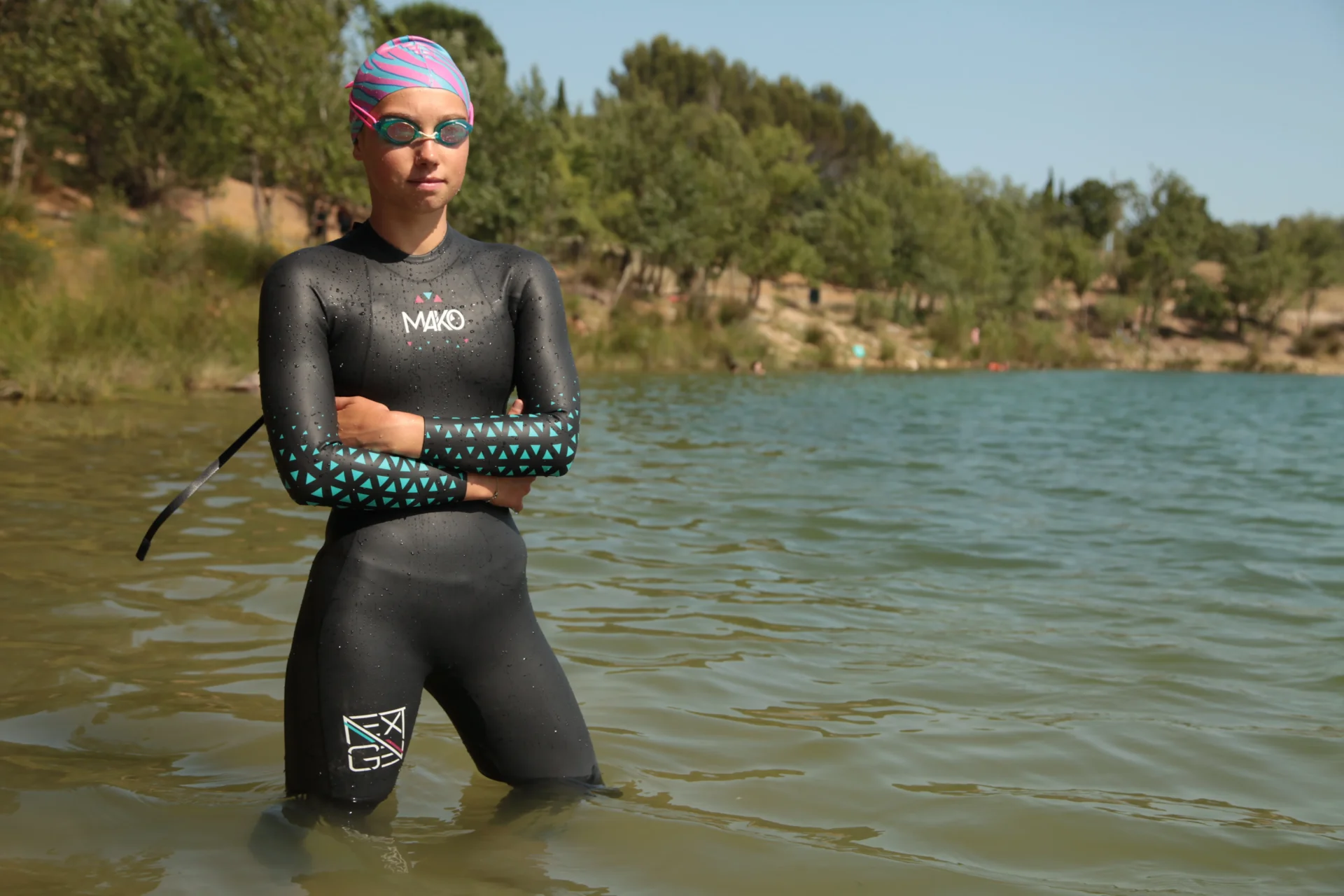
Triathlon is a demanding sport where every detail counts. Whether you’re preparing for your first S-distance triathlon or your tenth Ironman, choosing the right wetsuit is important.
| 🌊 Buoyancy | Neoprene traps microbubbles of air. As it naturally floats, it corrects your position in the water, lifts your hips and reduces hydrodynamic drag. |
| ❄️ Thermoregulation | essential when the water temperature falls below 20°C. |
| ⚡ Time-saving | a better hydrodynamic position = less drag in the water. |
Thickness: the number one criterion
The thickness of neoprene is measured in millimetres. It varies strategically: it is thicker on the torso to provide buoyancy and insulation, and thinner on the limbs to allow for greater mobility.
💡 The Mako standard : Our wetsuits are made from neoprene ranging from 5/3 mm, with specific 1.5 mm panels under the arms. Why? So as never to restrict your arm movement and to guarantee total flexibility.
How do you take your measurements?
The wetsuit must fit like a second skin to prevent water from getting in. Here are the essential measurements:
- Weight
- Height
Mako’s tip: If you’re unsure between two sizes, go for the larger one. A well-fitting wetsuit should be snug when dry. It will stretch slightly in the water. Only if you can no longer breathe or raise your arms should you go up a size.
The zip: at the back or at the front?
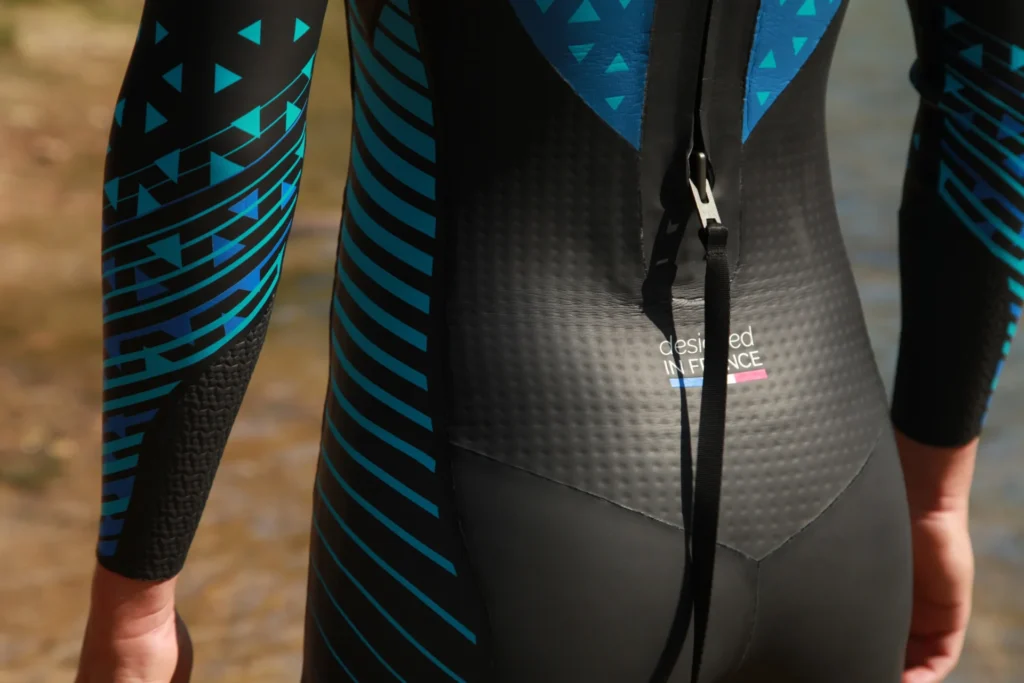
The wetsuit is worn with the zip at the back!
We make wetsuit with two types of zip:
- Reverse zip: fastens from the bottom up, so it doesn’t come undone whilst swimming. It’s designed for performance: it opens very quickly, saving time during transitions.
- Classic zip: fastens from top to bottom, often easier to use on your own.
Choosing a wetsuit to suit your ability
Every wetsuits are different, and your level plays a key role in your choice.
Beginner:
- Opt for a wetsuit with plenty of buoyancy (particularly around the legs).
- Aim: to correct your position in the water.
Intermediate:
- Aim for a good balance between buoyancy and freedom of movement.
Confirmed / performance:
- Choose a jumpsuit that’s very flexible, especially around the shoulders.
- Aim: to maximise glide and maintain a natural swimming stroke.
Buoyancy panels
If you tend to have ‘sinking legs’, look for models featuring Aérodome panels: these increase buoyancy around the legs thanks to the panels on the front of the thighs. They help correct your position in the water without any extra effort. At MAKO, this technology is featured on the Nami, Naiad and Ultimate Torrent models, amongst others.
Maintenance: extend the life of your campervan
To ensure your MAKO wetsuit lasts for years:
- Rinse it with fresh water after each use (inside and outside)
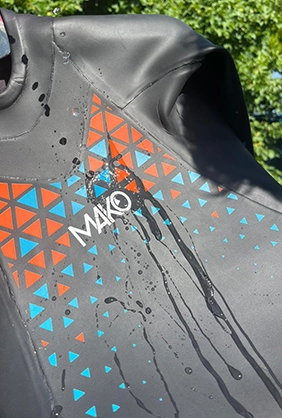
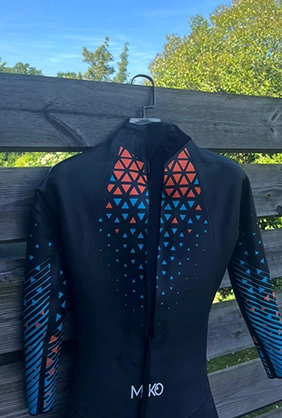
- Dry it in the shade, on a wide hanger; never in direct sunlight
A final word: try it out before you choose
The best wetsuit is the one that fits you perfectly. We recommend that you try the wetsuit on if possible. You can get a feel for it in real-world conditions at our various stockists or during our test sessions.
The MAKO SPORT team is on hand to advise you based on your body type, your running programme and your budget.